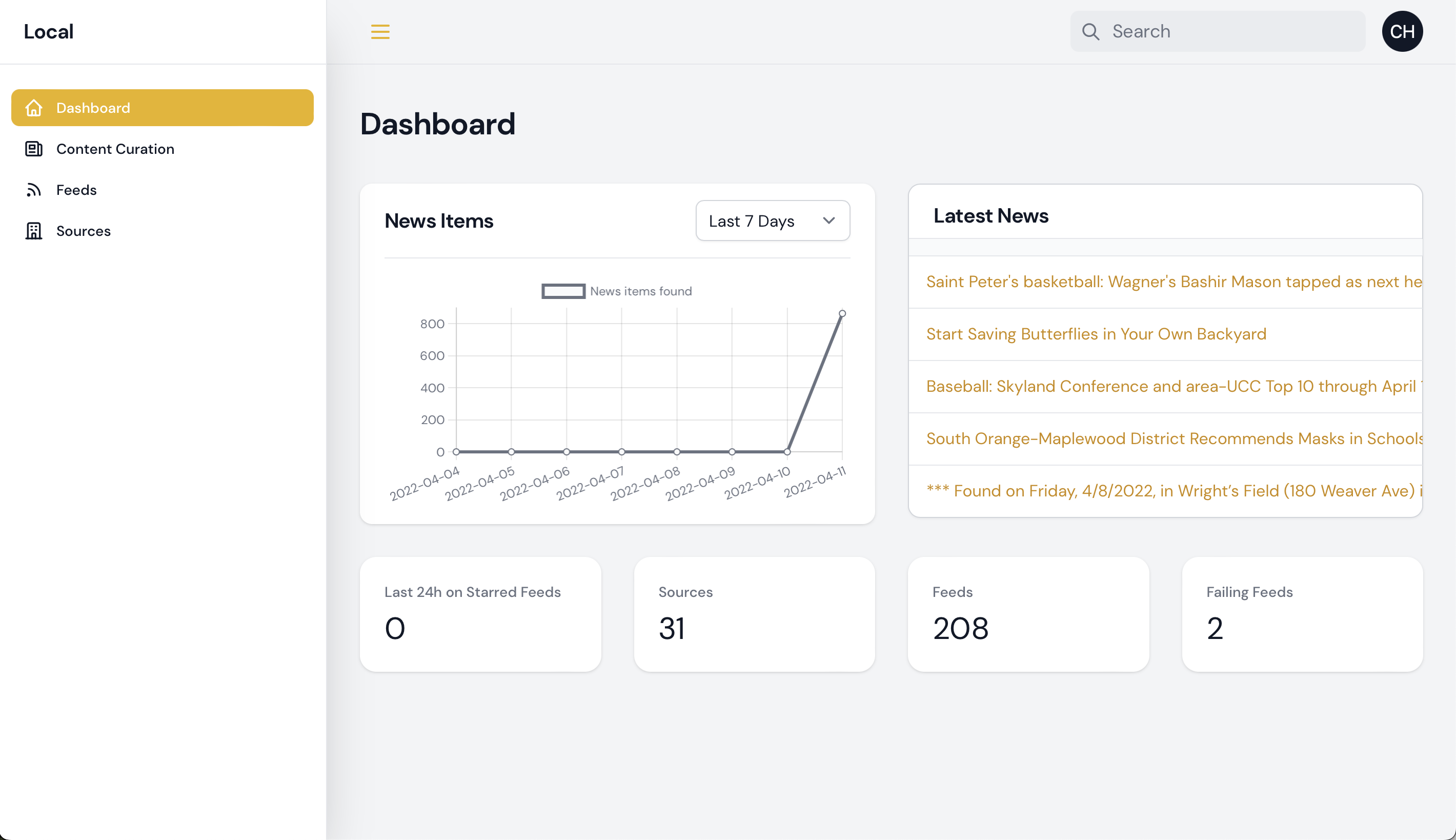
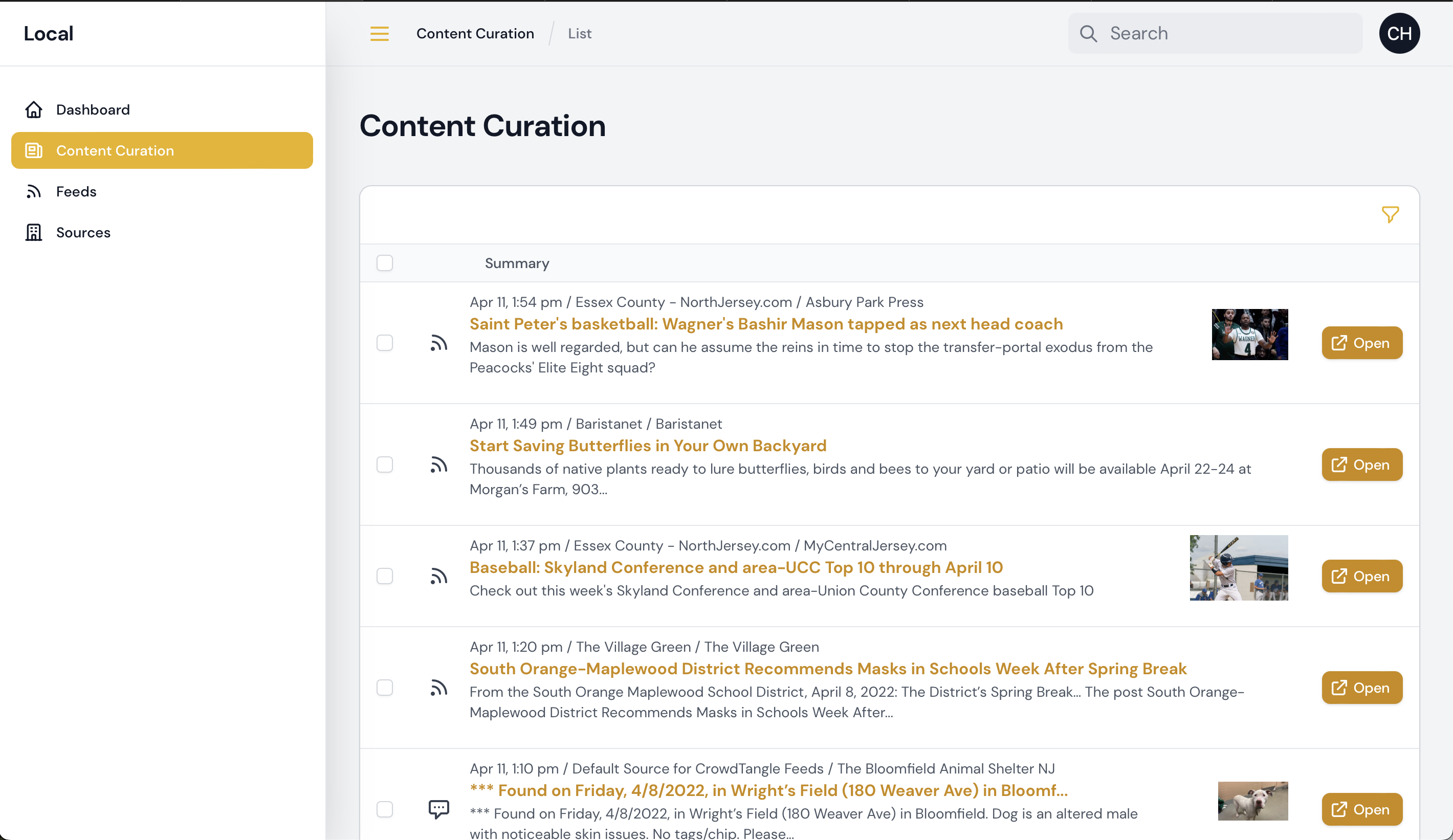
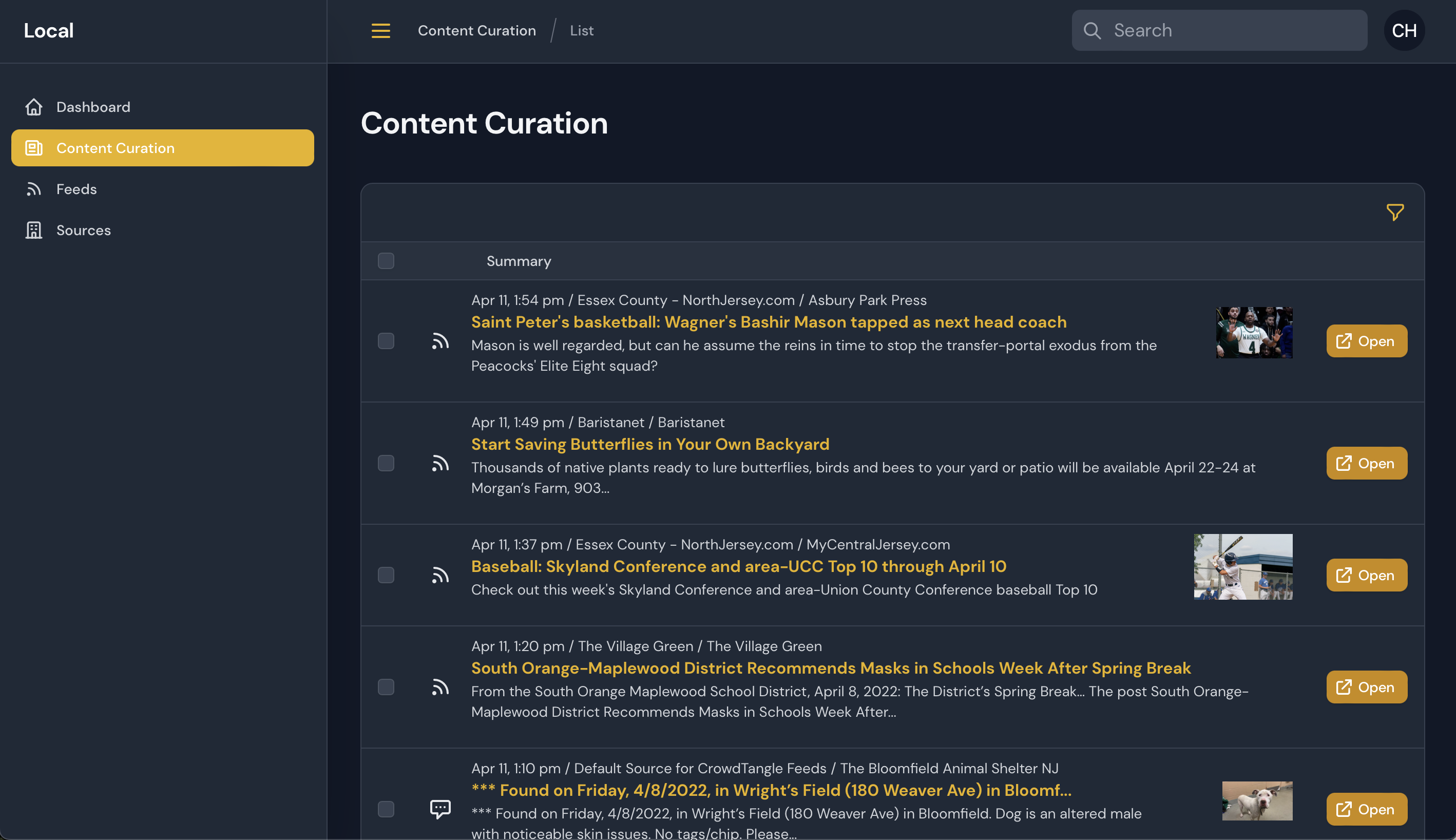
Since delivering the tool I’ve built to Simon and his team for testing, we’ve spent the last few weeks collecting feedback, discussing details and implications of that feedback, making refinements to the tool, and moving toward the point where it is ready for daily use. This post is a walk through of that process.
The first round of feedback that came in was a mix of big picture refresh questions about the data model, smaller aesthetic suggestions, and enhancements/requests around the content curation view:
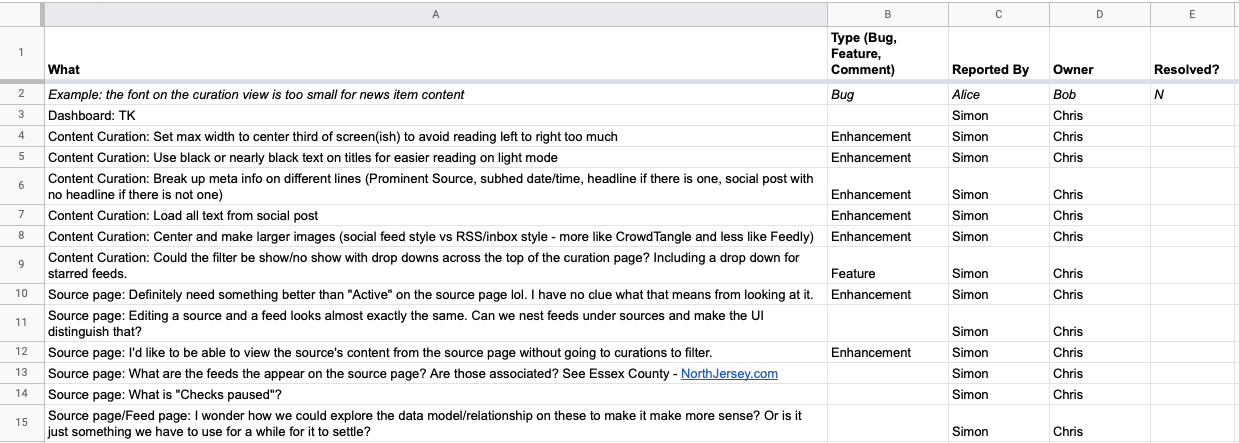
(You can continue to view the full feedback spreadsheet here.)
Some of those items were easily addressed through minor refinements, but others were more substantial, so on April 20th, Simon and I did a phone call to talk through them. Here are my rough notes from that conversation:
- In general we’re going in the right direction, excited to get the “design quirks” ironed out
- The responsive and mobile-friendly nature of the tool is good
- Possibility of bringing in a collaborator/consultant Simon has worked with for additional UI feedback later on
- Conversation about terminology, re-clarifying differences and relationships between Sources and Feeds, and how those will ultimately be managed as the tool expands.
- Filtering options for the Content Curation view could expand forever, so need to focus on making sure the default view is as helpful as possible to the daily workflow of the news producer
- Need to switch from notion of “starred” Feeds to a more general way to tag Sources, including a tag like “Top” or “Favorite” that might be selected by default.
- Would be helpful to be able to quick-add sources from the feed edit screen
Following the call and the subsequent updates to the feedback spreadsheet to reflect our conversation, the plan was for me to deliver the refined version of the tool back to Simon and team by the end of that same week (so, April 22nd) so they could continue their testing.
You can see the ongoing work on the Laravel News Harvester package based on this feedback and other requests by viewing the commit history on GitHub. Again, this package and tool is now available for any other organization to use, benefit from and contribute to.